Current anti-immigrant policies implemented by the U.S. make it harder for people to seek asylum.
After fleeing the Anglophone crisis in Cameroon, crossing the Darien Gap on foot and being detained in Mexico for three weeks, Franklin Ejenma, 30, was stuck in an immigrant detention center in Southern California. He had no way to contact any friends or relatives — other than facility payphones that he couldn’t afford to use — for four months while he waited for the courts to decide whether he would be granted asylum.
For Ejenma and people forced into situations where they must leave their homes, things can seem hopeless. The journey to the U.S. is long and strenuous, but even in times of hostility, they can still find help within the American border.
In 2016, the Cameroonian government started hunting down members of the Southern Cameroon National Council, a peaceful organization that wants “to build a democratic state” that separates the anglophone (British heritage) regions from the francophone (French heritage) regions.
“I was a member, but I had never participated in any meetings, I just registered and that was it,” Ejenma said.
Ejenma said the Cameroonian police and military were hunting members of the national council because if anglophone regions were to separate from francophone ones, then francophone regions would lose the majority of their resources and face economic repercussions. In late 2018, Ejenma was illegally arrested. The police came to his house and beat him up, then took him into custody without a warrant, he said.
His lawyer got him out but warned him that the police would come back with a warrant next time. He told Ejenma his only option was to flee.
“It all depends on if you can afford to leave,” Ejenma said.“It’s because I could afford to help myself. But so many people don’t have money to do so.”
Ejenma said it cost him about $10,000 to emigrate to the U.S., including airfares, paying off corrupt police in Colombia and paying multiple bureaus of immigration. The process of gaining American citizenship can cost anywhere between $2,000 and $4,000, depending on legal fees, but that doesn’t include any extra expenses, such as travel.
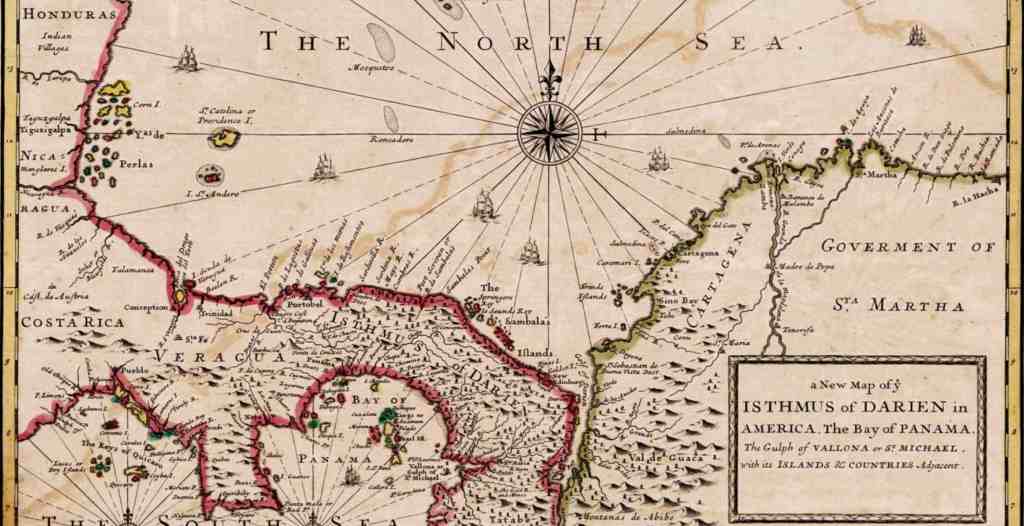
He flew to Ecuador, traveled by road until he reached the Darien Gap, a region between Panama and Colombia notorious for its harsh conditions.
At the end of the five-month journey through South America, he presented himself at the San Ysidro Land Port of Entry. Ejenma said border patrol agents took him and more than 20 others into a tiny underground facility.
“I was there for two weeks. We were being fed the same thing every day. The truth is, to me, that was the toughest part of the journey,” Ejenma said.“In that room, there were no windows. Nothing. You didn’t know when it was daytime or night.”
After that two week period, Ejenma was transferred to Otay Mesa Detention Center in San Diego. He remained there for four months, all the while researching the legal process of seeking asylum and representing himself in court. Harper Otawka, Staff Attorney in the Legal Orientation Program was in contact with Ejenma and guided him through some of the legal processes.
Even in today’s anti-immigrant political climate, immigration lawyers work tirelessly to help people seeking citizenship, Otawka said.
“I can say generally, that in every case I’ve worked on, I had the honor of working with an individual that was deserving of the utmost humanity,” Otawka said. “But was confronted by a system that was meant to dehumanize them.”
In detention, Ejenma was in contact with Casa Marianella, an organization located in Austin, Texas, that houses asylum seekers and displaced immigrants. Casa Marianella, also known as “Casa,” housed Ejenma when he was released and paid for his airfares back to San Diego so he could attend his court date. Casa houses anywhere from 40 to more than 60 people at a time according to Myriam Shehata, Medical Case Manager at Casa Marianella.
“I think (Casa is) a really wonderful place … in the sense that there aren’t many places I know of around the country that offer like wraparound services to people who are newly arrived to the country,” Shehata said. “It’s probably my favorite thing that I’ve ever done.”
In 2019, the Trump administration implemented a series of roadblocks that have drastically changed the process of seeking asylum in the U.S.
“Because of the way immigration works in the U.S. (the government is) able to change the situation of immigrants (for the worse) very easily through policy,” Otawka said.
Those obstacles, mainly created by Stephen Miller include an agreement between the U.S. and Mexico that means people have to seek asylum in the countries they land in first, which often is not the U.S.
Shehata said that despite the Trump administration’s efforts to keep immigrants from entering the United States, there is still room for kindness and compassion.
“I think on that spectrum of like how you treat people, there’s this kind of rigid bureaucratic way, and then there’s also this really humane, really personal way,” Shehata said. “And I think that Casa very much is on the (humane) end of the spectrum of how we approach people.”
Regardless of recent anti-immigrant policies and sentiment, many still seek a home in the land of opportunity. Oriana Garcia, a radio-television-film sophomore at the University of Texas at Austin, immigrated to Texas from Venezuela with her family when she was nine years old. Garcia said her family thought of their future and the opportunities that living in the United States would give them.
“From experience, as an immigrant, there is an aspect of knowing that there is something called the American Dream that allows you to strive to achieve it, whether it be for a better lifestyle for yourself and your own family, better opportunities to succeed or just a better future,” Garcia said.
Ejenma also expressed that opportunity was one of the primary reasons he chose to immigrate to the U.S.
“The truth is that (there are) much better opportunities here,” Ejenma said. “I am an entrepreneur and I came up with my own ideas, so I was doing well (in Cameroon). But most people don’t, because they’re waiting for a job and there are no jobs. But here, there are jobs that pay very well. So I think it’s much better.”
Garcia said even though the idea of the American Dream can be problematic, people wouldn’t move here if there wasn’t some hope in it.
“I think people move here because they know this is a country that can provide them with things they may not be able to have at home,” Garcia said. “I don’t think anyone ever wants to leave their home unless there are clear motivations behind the moving.”
 meena anderson