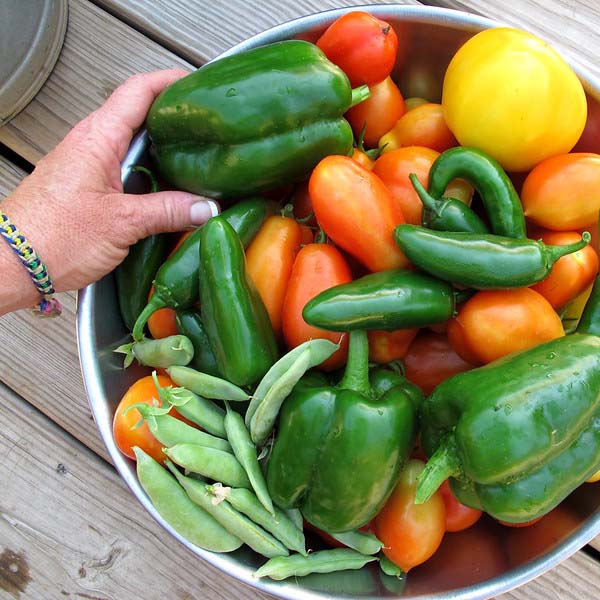
A long-form piece breaking down the basics of the food justice movement.
Food justice is a movement everyone is involved in whether they know it or not: unless you’re a plant regularly photosynthesizing your food from the sun, you’re getting nutrition from somewhere. The question is: who gets it? How do we get it? Are we okay with that?
This digs a little deeper into these questions and the three tenets of food justice: watch out for the series:
- The right to grow
- The right to sell
- The right to consume
Take it now!
Food Justice 101: The right to grow
At first thought, it might seem like we all have the right to grow our own food: there’s plenty of space and seeds are cheap, right? So why can’t everyone just quit their jobs and become farmers?
The fact is, this is a question of access, not ease: not everybody has access to the information, supplies, or people required to grow a significant portion of their own food.
Who gets to grow food?
Cultural norms exclude large swaths of people from even entering the world of gardening: growing our own food has been commodified as a hobby for affluent, older, predominantly white people. You have to have time and space and money to have a vegetable garden. People of color associated with growing food are often somewhat fetishized as poor, immigrant, or part of a mistreated demographic. And let’s be clear, historically this is absolutely true, but it makes the leisure gardener out to be monolithic: straight, white, and candidly female.
The reality is, it’s an activity that’s been 1) been a part of humanity for thousands of years, and 2) that nourishes the body and soul. Part of the right to grow aspect of food justice is redistributing access to healthy and nutritious food. That includes how we market gardening, how we talk about gardening, and who we see talking about gardening.
Who gets to grow what?
Many people, including farmers, don’t even always have the freedom and agency to grow their own food. Many American farmers are vulnerable to Monsanto — the final boss of rabid capitalism — because 90% of US soybeans and more than 80% of US corn are grown from Monsanto-patented seeds. That might seem tangential, but because of their licensing agreement, Monsanto has the jurisdiction to sue farmers who don’t follow “Monsanto procedures” and to investigate farmers’ fields and records at any time. To some, this may seem like fine business, but to the rest of us, this is clearly a flagrant limitation on something fundamental, something that doesn’t belong to anybody – the source of how we survive. Even a quick google on indigenous philosophy expresses this.
But, like, how do you grow even?
So here’s the deal: even if you could grow whatever seed you wanted, even if you felt represented in the gardening category, how the hell would you even know what to do when you got started? This is an often underlooked facet of the systemic right-to-grow problem in America. The information is tribal — it lives in the heads of people who have been doing this, generation to generation, for thousands of years. The information is fragmented: it is piece by piece, in a million locations, disorganized and impossible to navigate. The information is inconsistent: you look at a Yahoo forum from 2003 about cucumbers in Arkansas and think, “is this me?” Likely not (unless you’re a cucumber gardener in Arkansas who potentially time travels; if so, you do you).
So how — if this space is tribal, fragmented, and inconsistent — do you ameliorate this problem?
That question is one of the primary, driving forces of our mission at Gardenio. How can we, as a tech-enabled project, make this information available to everybody? How can we remove the power of the gatekeepers and allow everyone in? How do we pass information, millenia in the making, onto the next generation — to preserve, amplify, and advance the knowledge, both scientific and tribal, for millennia to come? This is the vision. This is the substance of our grand project.
What can be done?
As much as we hate corporate greed and systemic justice issues, it’s a little difficult to fight on an individual level. That doesn’t mean nothing can be done about it, but it’s often easier to start smaller. Many organizations — from local, grassroots movements to more established organizations — like the U.S. Food Sovereignty Alliance (USFA), Central Texas Food Bank, and Urban Roots are dedicated to altering the food supply chain and shifting more power to the consumer. It’s a matter of democratizing the information and tools needed to grow your own food, versus a chosen few gatekeeping that information — Monsanto and Bayer, and those who have the time and “leisure” to maintain a garden.
Our goal is to empower people to grow their own food by equipping people with delicious plants and the info on how to grow them. We believe that gardening connects people to their communities, as well as bridges people across generations; in the common activity of putting our hands in the dirt, of engaging with nature, we’re reconnecting to our food, our neighbors, and ourselves.
Food Justice 101: The right to sell
So, who’s trying to get safe and nutritious food to the people? There are grocery stores, restaurants, farmers markets, and more. But there’s nuance there: if all of these entities were working at maximum efficiency then there arguably wouldn’t be a need for the food justice movement.
We’ve already covered the right to grow: if you want to support people growing their own food and engage more personally with your produce, maybe farmers markets are the way to go? However, it’s not always that simple. There’s a significant cultural discrepancy in who has access — which is wild, because the agriculture of this nation was built off the backs of black and brown people — this is the unsexy realm of applying to farmers markets.
Then, who gets the capital to start a farm, or any kind of food-selling entity?
What are the policies and regulations that affect food banks and pantries? Oftentimes, the regulatory requirements to start a food pantry or food bank are prohibitive. Listen, we’re not anti-reg, but many municipal codes are outdated and don’t work in the interests of safety or trying to get people safe and nutritious food. Usually, these organizations are run primarily by white people who can’t connect to those audiences. We understand that food transcends race, but these communities need to see themselves represented. Some local organizations, like Mobile Loaves & Fishes are working on this, but it remains an issue in the food selling sphere.
You make it through the obstacles and you can sell food! What now?
Congratulations! You’re a food seller — a restaurant owner, a vendor at a farmers market, etc — but… where does food come from? Sure, the ground, a farm, some kind of animal, but how does it get from nature to the seller?
In a few ways: obviously, human labor is required somewhere along the distribution line. One of the most notable is vastly underpaid immigrant labor. These immigrants usually come from Latin America and have been compared to “modern indentured servants (but with) no prospect of becoming U.S. citizens” by the Southern Poverty Law Center. In conjunction, many women, and specifically women of color working in the agricultural industry face a significant risk of sexual assault and harassment. Suicide rates among farmers are pervasive and are an incredibly pressing issue in the food production world: a significant number of these suicides are due to sexual assault. It’s impossible to advocate for urban women without advocating for rural women
Okay wait, what is food entrepreneurship?
Food entrepreneurship is the knowledge on how to develop and distribute a food product, be it a new restaurant chain, a new kind of granola bar, or a farming business. The question is, which food entrepreneurs get what funding? The food industry is heavily regulated, which often means disparity in the distribution of power — in other words, women and black and indigenous people of color (BIPOC) are more likely to work back-of-house jobs and therefore paid less. There are also far fewer BIPOC employed in fine-dining restaurants than white employees.
And this isn’t just a food industry thing: take the rapidly growing cannabis industry. Black and brown people have historically been massively incarcerated, with a significant uptick in drug-related sentences in the late 70’s and early 80’s after Nixon and Reagan pioneered the War on Drugs. Incarceration further increased in the 90’s after Clinton introduced the “three strikes” policy in his 1994 crime bill, and enforced mandatory minimum sentences for minor drug offenses.
Now that the trend is toward legality, there are significant barriers to POC trying to start legitimate cannabis businesses: the application to get a license to sell marijuana isn’t at all transparent or easy, and involves dealing with a lot of government regulation. It’s also illegal in most states to obtain a cannabis selling license if one has been previously incarcerated for any drug charges, including marijuana-related charges (John Oliver has a bit on this). Black people, typically stereotyped as criminals, as drug users and drug dealers, have been disproportionately punished by essentially ineffective anti-drug laws. Now that cannabis is only fully illegal (a.k.a. Not decriminalized and not authorized for medical use) in eight states, primarily white people are profiting from a booming business. Previously incarcerated BIPOC can’t even apply to compete; it’s a racist system exacerbating unequal opportunity.
This obviously isn’t an article on the cannabis industry, but the example of inequality and how it affects regulation strikes a very clear parallel with inequality in regulation across the food industry.
That’s not to say that there aren’t people doing really amazing work to combat issues of representation and diversity: Big Wheelbarrow is a robust food entrepreneurship business in the Austin area dedicated to easing the management of suppliers from multiple markets.
Listen, there’s a lot going on, and it’s probably a little less sexy when we talk about regulation, and for-profit entrepreneurship, but as long as we live in this system with the biases we have, it’s important to investigate the stewards of food production. This country was built on the backs of black and brown agricultural labor. At Gardenio, we’re committed to honoring that, to spread the joy of growing to whoever is willing or receive it, and to educate on the rich, difficult, but grand history of monumental effort by BIPOC to generate the world we live in today. It is not without sin, and not without spectacle.
Food Justice 101: The right to consume
Another definition for food justice is that it’s a response to food insecurity — the lack of access to healthy and nutritious food — which disproportionately affects BIPOC, low-income households, and rural communities.
Many Americans — approximately 49.1 million according to a 2014 study — are food insecure. Having access to a supermarket less than a mile from your home simply isn’t the reality for many people across the country.
Food insecurity means someone doesn’t have physical, social, and economic access to safe and nutritious food. By the FDA and USDA standards food that’s deemed “safe” sufficiently meets dietary needs and food preferences for an active and healthy lifestyle. Sometimes that bar is incredibly low (looking at you, “ketchup is a vegetable”). Also: fuck Ronald Reagan.
That doesn’t necessarily mean those who are food insecure don’t have any access to food, but the food they have access to is either too expensive or not nutrient-dense. Food insecurity primarily affects BIPOC and low-income families, and one of the main focuses of the food justice movement is to shift some of the power in the food supply chain from producers (corporations like Bayer, which acquired Monsanto as a part of its crop science division in 2018) to consumers (which, in general, are just trying to do the best things for themselves and pretty cool).
Food deserts:
One of the discrepancies in the food supply chain is the abundance of food deserts: 23.5 million people lack access to a supermarket within a mile radius of their homes. Another study done across multiple states compiled census data and found that low-income areas have half as many supermarkets as wealthy areas. It’s not always as simple as this, but people who are food insecure often live in a food desert. But not all food insecure people live in a food desert (ie: you may live with access to healthy, nutritious food, but it’s not affordable).
The Food Trust defines “food desert” as an area or neighborhood where all residents live more than 10 miles away from a grocery store. This doesn’t necessarily mean that people who live in food deserts don’t have any access to any food at all, however, it is often food in fast-food restaurants, gas stations, or convenience stores, where food is often disproportionately more expensive compared to grocery store prices as well as significantly less nutritious.
As displacement and gentrification affect various cities across the US, it’s impossible to not acknowledge the impact that lack of food access specifically has on black and brown communities. When a primarily disinvested area (see also: usually poc area) starts getting gentrified, it’s common for the socioeconomic makeup of the space to increase — often lowering affordability for the original residents. And because of systemic forces, that often means that higher-income = white folks. People move into an area, then safe and nutritious food sources (grocery stores, restaurants, co-ops, etc) start to crop up, and it prices out historically black and brown communities. We think municipalities can do better.
Some black activists are encouraging people to move past the term food desert and start using “food apartheid” which more accurately describes the way systemic racism is infused into the food justice movement.
It’s a little intimidating taking in all of this information and quite easy to feel helpless. But maybe it’s a little less intimidating to get involved locally: after all, we believe in the power of community through growing and consuming our own food.
Who’s working on this? What can we do about it?
Because of the ubiquity of food, it seems like it shouldn’t be difficult to enter the world of growing — or, dare I say it, growing, selling, or consuming safe and nutritious food on your own terms — especially with the grassroots movement of redistribution and democratization of information and resources.
However, there are a few ways we can get involved and take action. You can contact local government officials to petition to raise the minimum wage for people working in the food and agricultural industry and donate (either financially or with food) to local soup kitchens, food banks and food pantries, or volunteer at one.
It’s easy to get bummed about all of this information, but don’t worry too much! Our energy is better spent on being part of the solution. Helplessness is normal and necessary, but ultimately unhelpful. What a radical act it would be to acknowledge this world’s shortcomings and work to make it better. To take action in the face of what should reasonably be a kind of emotional paralysis. Let’s soak it in, listen to some tunes, and get to work.
 meena anderson